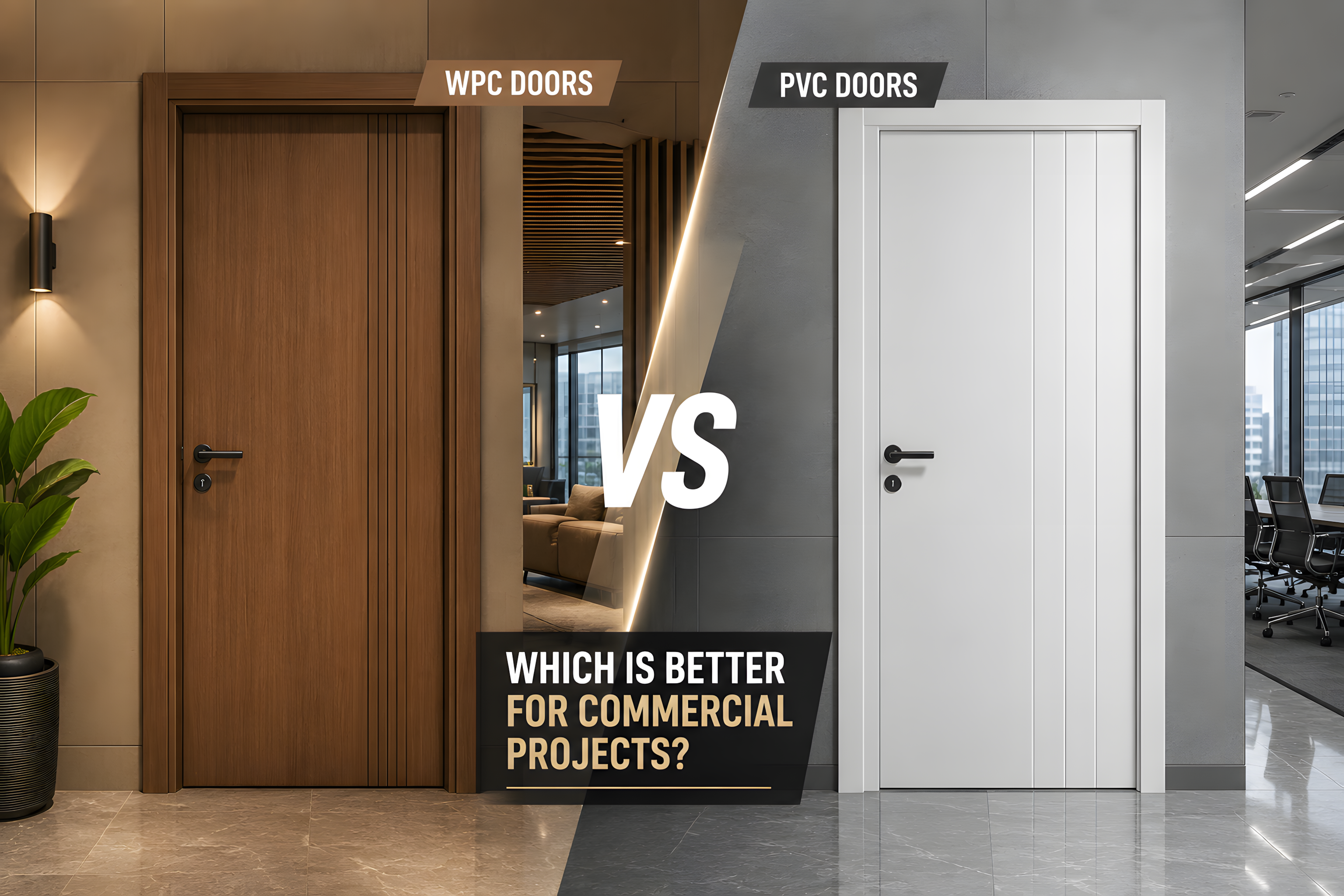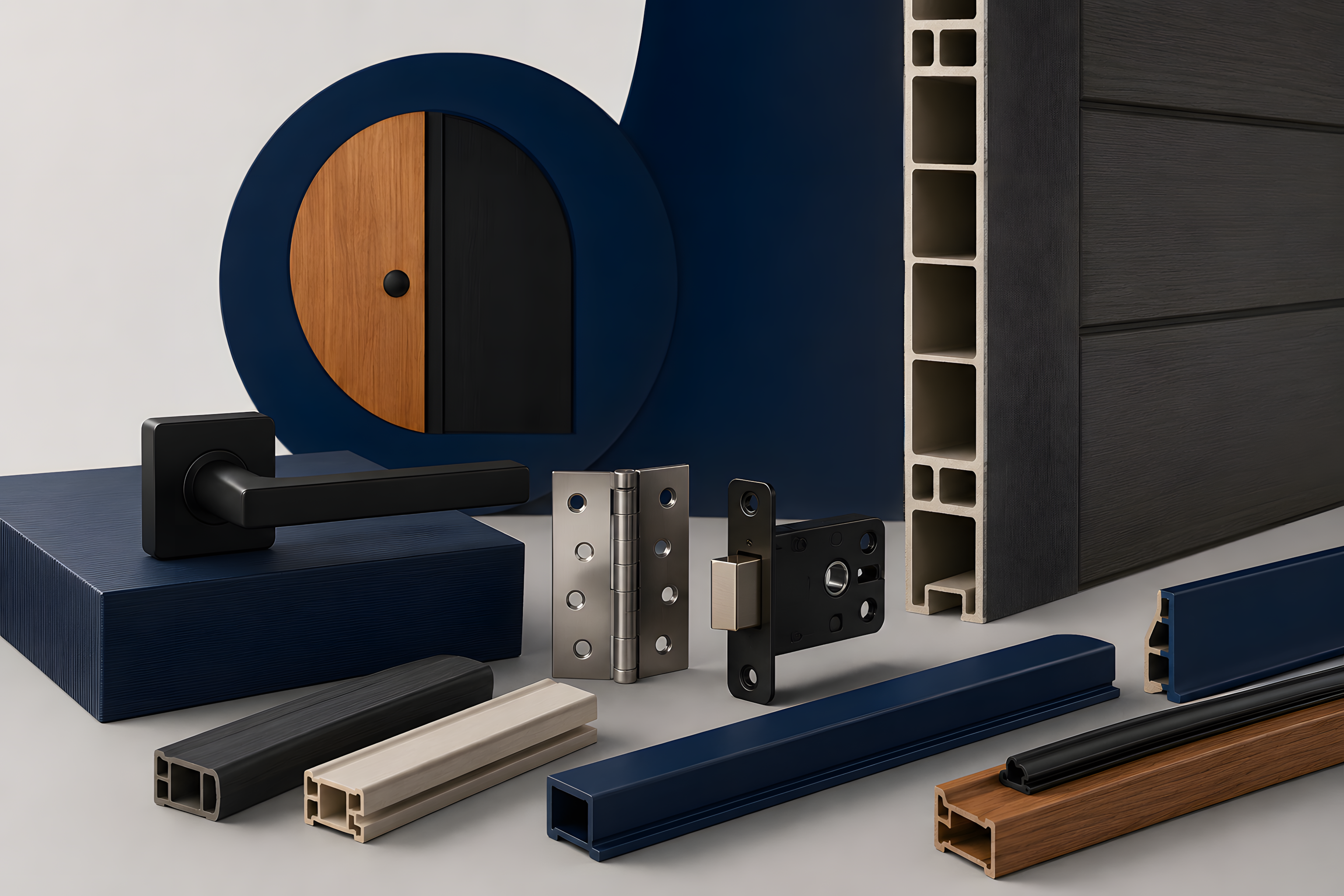
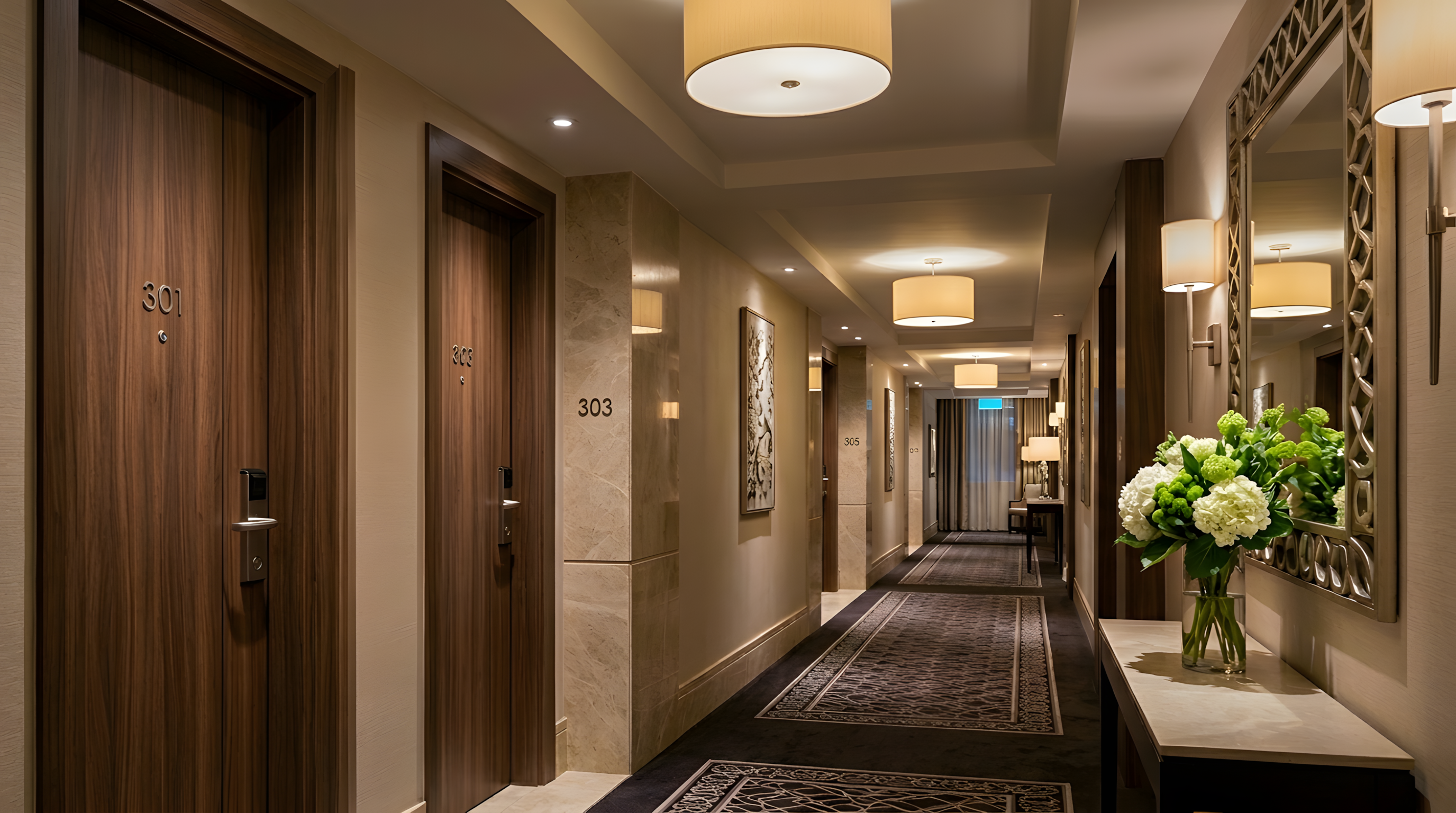
Hotel and hospitality projects put doors under a kind of stress most buildings never see. Hundreds of guests a week, housekeeping carts, room service trolleys, humid bathrooms, and tight renovation timelines all add up fast. Traditional wood doors often can't keep pace — they swell in humidity, dent under daily wear, and need constant refinishing.
That's why a growing number of hotel developers, contractors, and procurement teams are switching to WPC (Wood Plastic Composite) doors for new builds and renovations alike. Here's what's driving the shift — and why it matters for anyone sourcing doors at hotel scale.
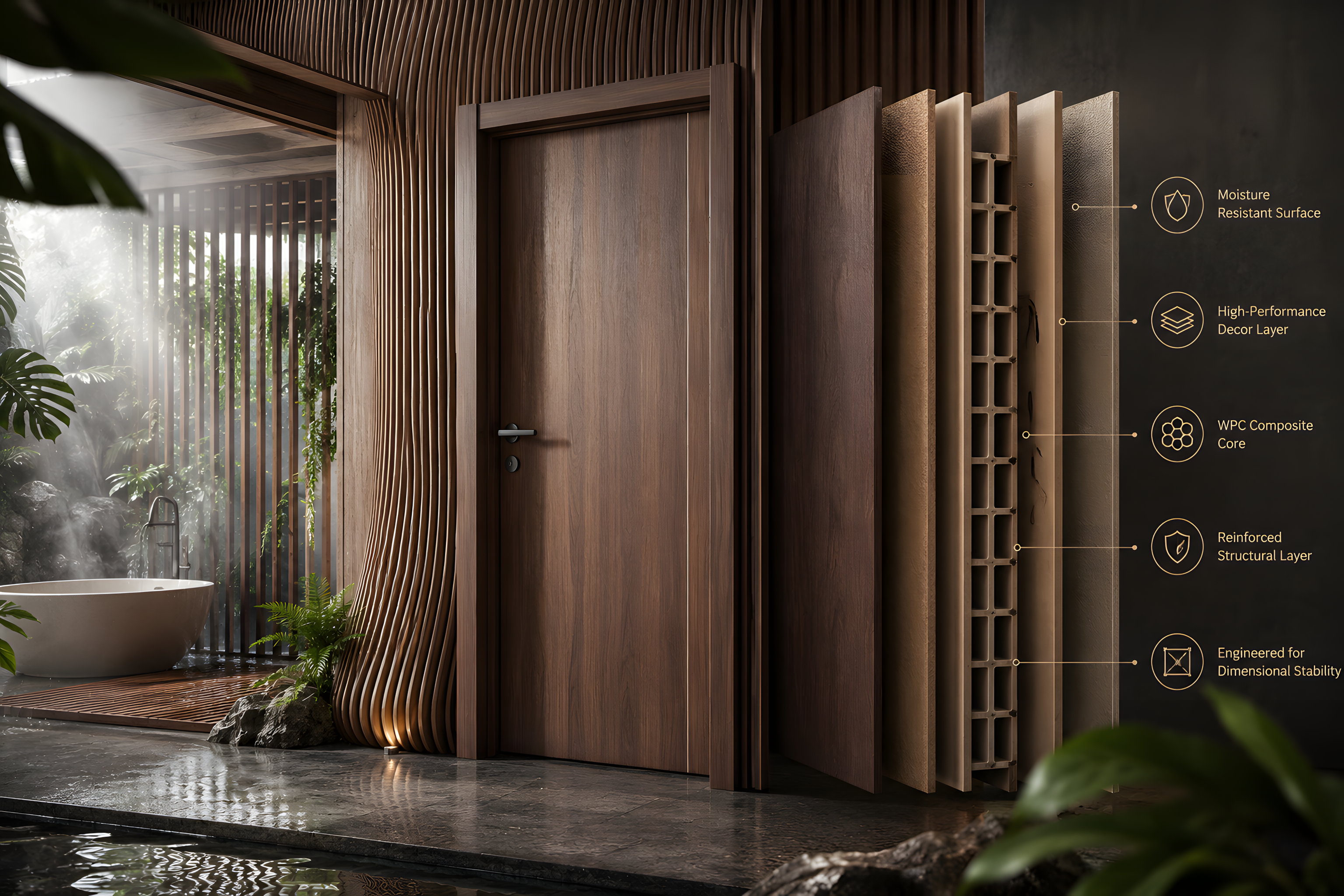
1. Built to Handle Humidity Without Warping
Bathrooms, spas, pool areas, and basement-level service corridors all expose doors to consistent moisture — conditions that cause solid wood doors to swell, warp, or develop mold over time.
WPC doors are engineered with a wood-plastic composite core that doesn't absorb water the way natural wood does. This means:
- No swelling or sticking in humid bathrooms or coastal properties
- No mold or mildew growth inside the door core
- Consistent performance across all climate zones, from dry inland properties to tropical resorts
For hotel groups operating across multiple regions, this consistency removes a major variable from the design and procurement process.
2. Lower Lifetime Maintenance Costs
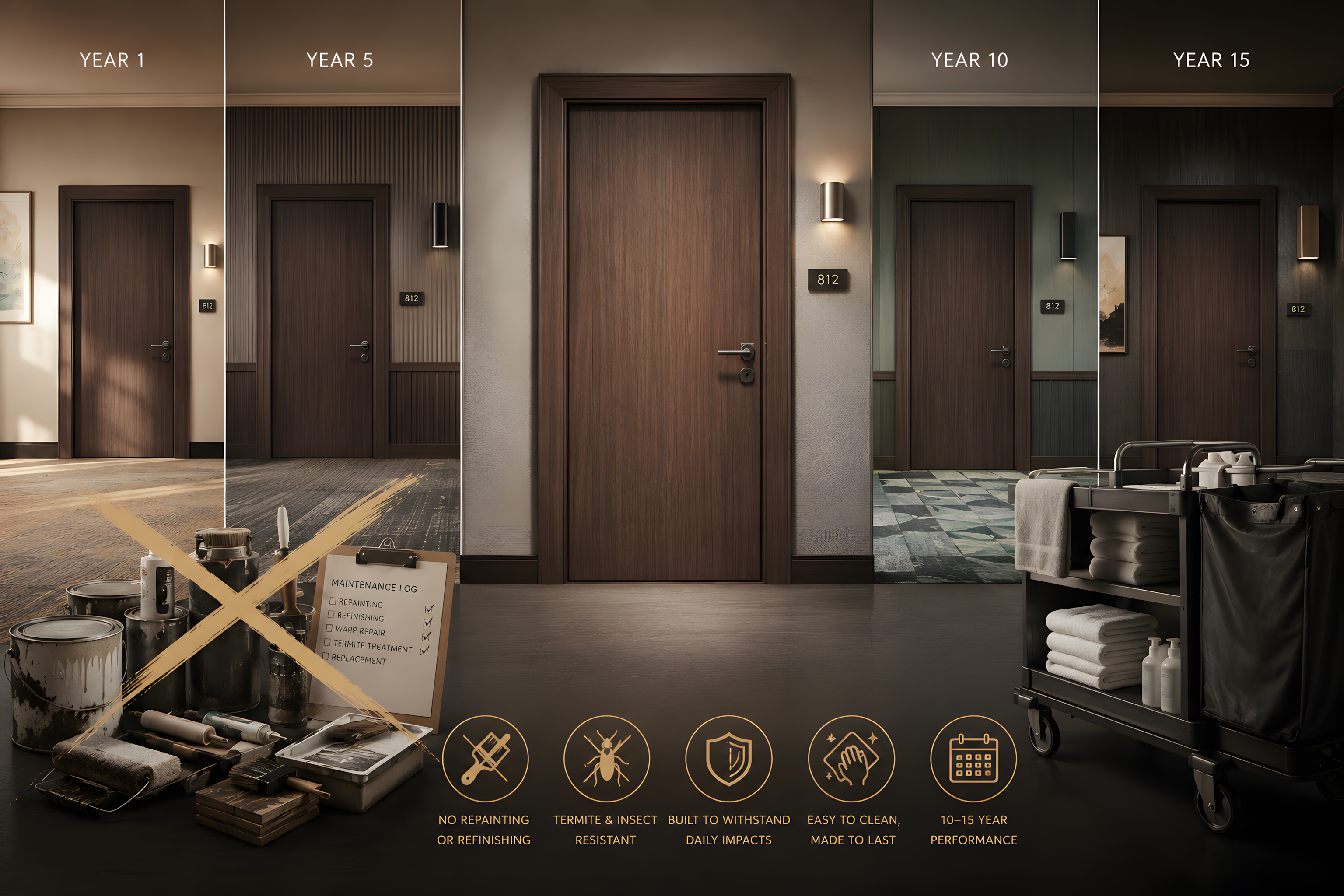
Hotels operate on tight maintenance budgets, and doors are a recurring line item — repainting, refinishing, replacing warped units, and addressing termite damage all add up over a property's lifecycle.
WPC doors significantly reduce this burden:
- No repainting or refinishing required to maintain appearance
- Resistant to termites and wood-boring insects
- Surface finishes (laminate, PVC film, or veneer) hold up to years of housekeeping cart impacts and daily use
For hotel owners managing properties over a 10-15 year renovation cycle, the reduced maintenance spend often offsets any difference in upfront material cost.
3. Faster, More Predictable Installation Timelines
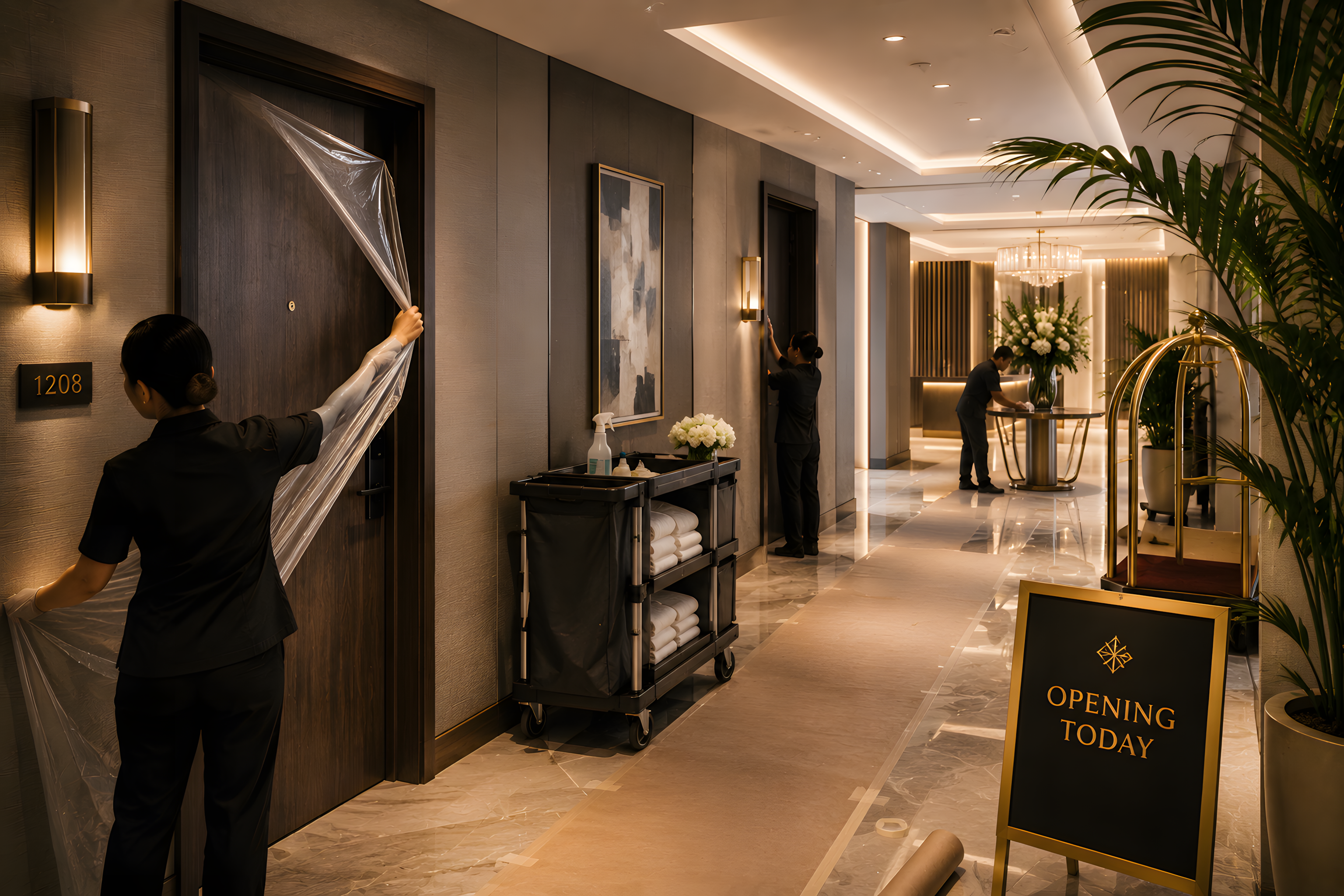
Hospitality renovations typically run on compressed schedules — many hotels can't afford extended room closures during a refit. WPC door components are manufactured to consistent dimensional tolerances, which reduces on-site adjustment work compared to natural wood, which can vary door to door due to grain and moisture content.
This consistency translates to:
- Faster installation across large room counts
- Fewer on-site cutting and fitting issues
- Easier coordination when ordering hundreds of doors for a single project
For contractors working against a hard reopening date, this predictability reduces project risk.
4. Design Flexibility Without Sacrificing Performance
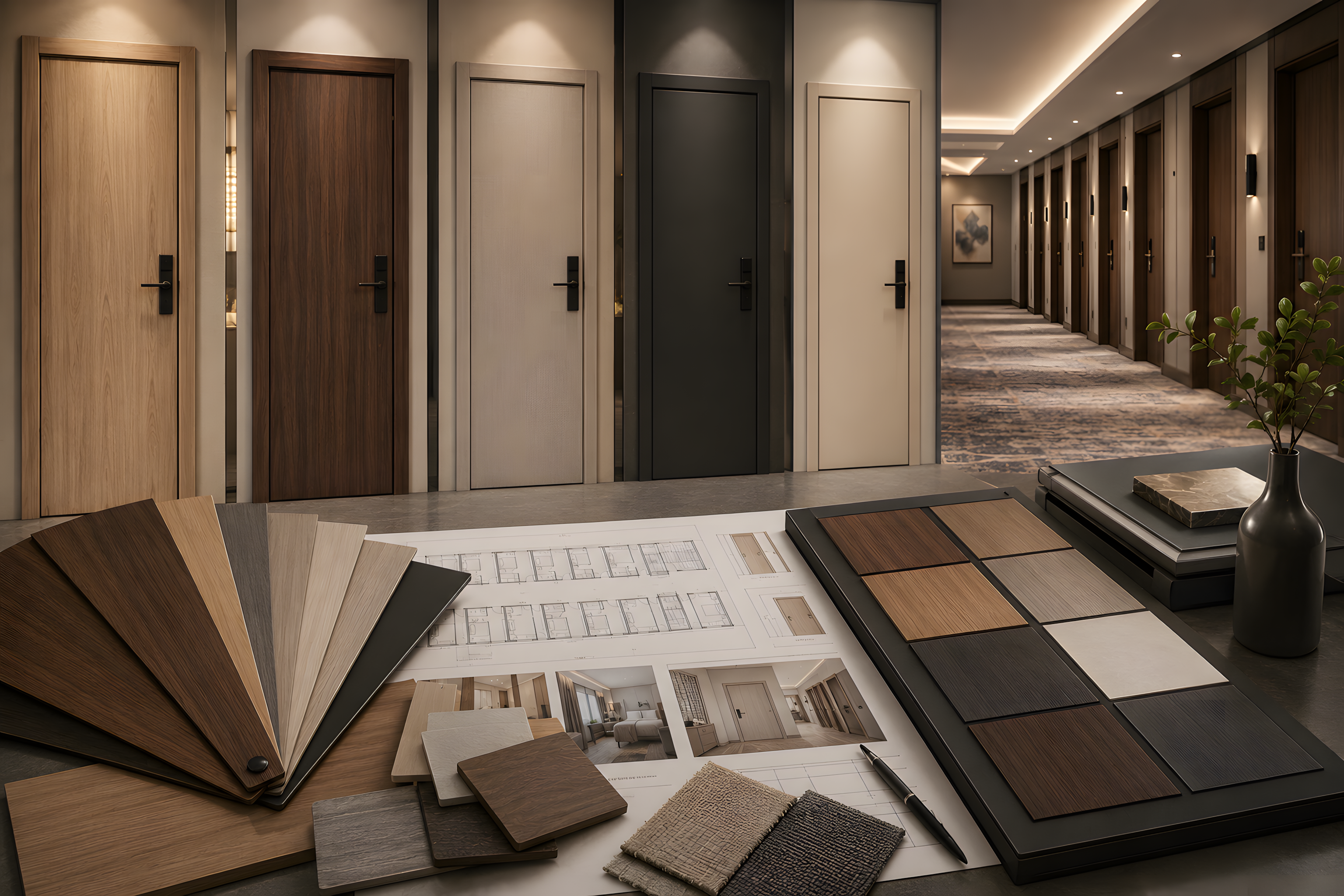
Hospitality design teams often want a specific aesthetic — matching brand standards, regional themes, or a boutique property's interior concept — without compromising on durability.
WPC doors support this through:
- A wide range of laminate, veneer, and PVC film finishes that replicate wood grain, matte, or high-gloss looks
- Custom panel designs, molding profiles, and color matching
- Consistent finish quality across large multi-room orders, since the base material doesn't vary the way natural wood does
This makes it easier for design teams to maintain visual consistency across an entire property, floor to floor.
5. Better Fire and Safety Compliance
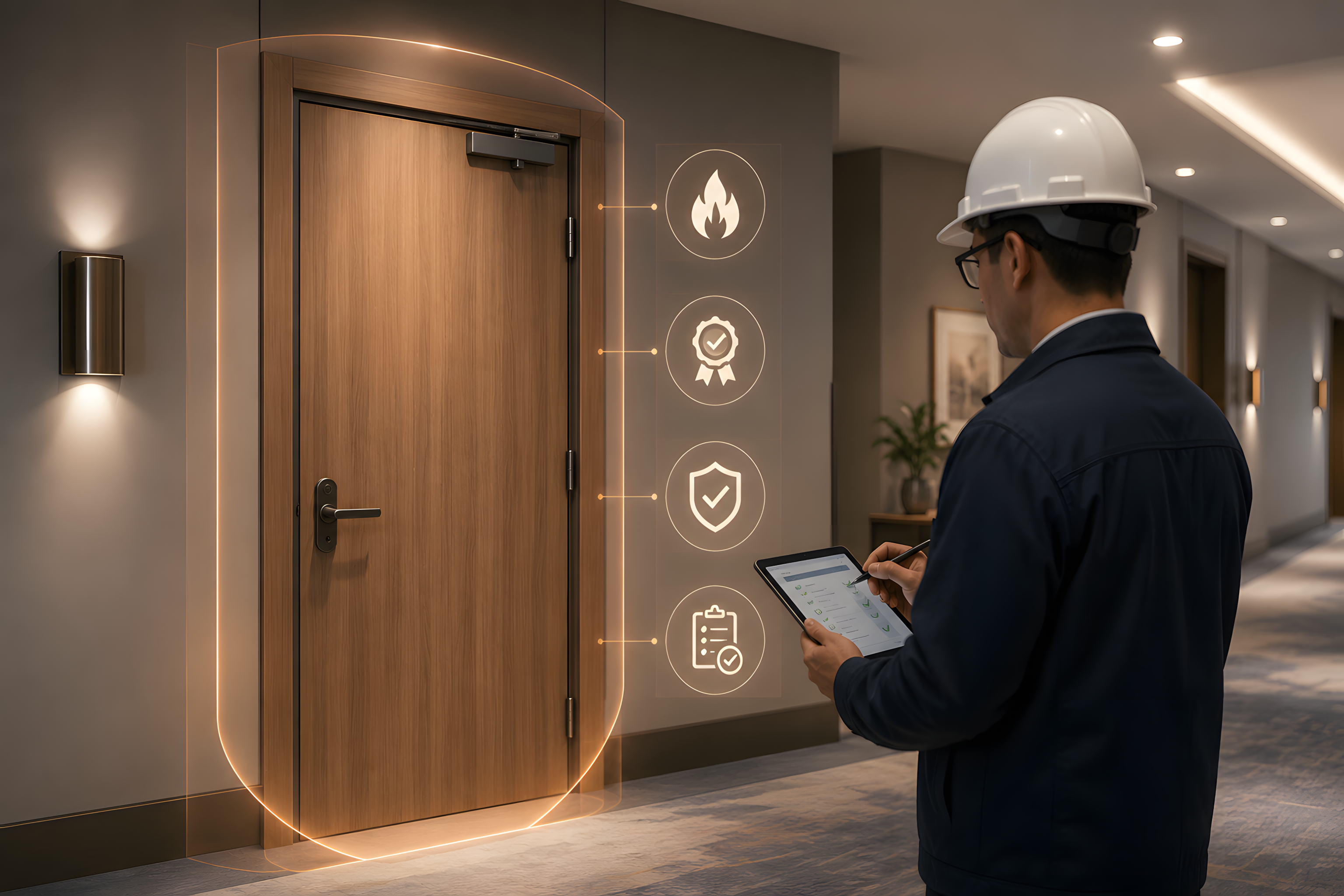
Hotels are subject to strict fire safety codes, particularly for corridor and stairwell doors. Many WPC door manufacturers offer components engineered to meet specific fire-rating requirements, which can simplify compliance for developers working across different regional building codes.
When sourcing for a hospitality project, confirm:
- Fire rating certifications relevant to your project's jurisdiction
- Door core density and composition test reports
- Compatibility with required hardware (fire-rated hinges, closers, seals)
Addressing this early in the procurement process avoids costly delays during final inspection.

Frequently Asked Questions
### Are WPC doors suitable for hotel bathrooms? Yes. WPC doors are highly resistant to moisture absorption, making them well-suited for bathrooms, spa areas, and other high-humidity spaces where solid wood doors typically underperform.
### How do WPC doors compare in cost to solid wood for large hotel projects? WPC doors are often comparable or slightly lower in upfront cost, and typically lower in total lifecycle cost due to reduced maintenance, repainting, and replacement needs.
### Can WPC doors meet hotel fire safety requirements? Many manufacturers produce WPC doors engineered to meet specific fire ratings. Always request relevant certification documentation before specifying doors for corridor or stairwell use.
### How long do WPC doors typically last in a hospitality setting? With proper installation, WPC doors commonly last 15-20 years or more in commercial use, with significantly less maintenance required compared to natural wood alternatives.
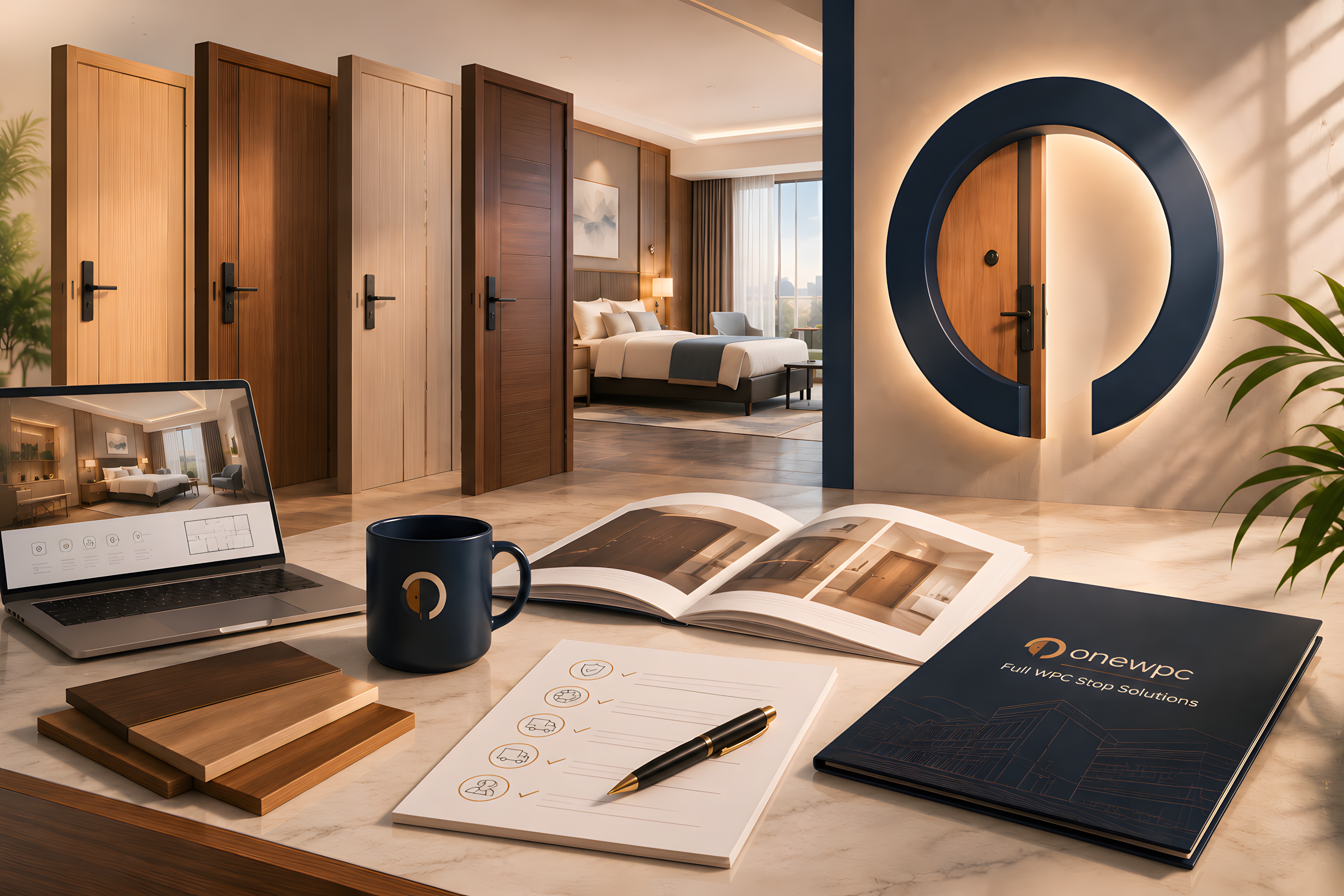
Sourcing WPC Doors for Your Next Hospitality Project
As hotel groups look to cut long-term maintenance costs while meeting tighter renovation timelines, WPC doors have moved from a niche alternative to a standard specification in many new builds and refurbishments.
For procurement teams and contractors evaluating suppliers, the priority should be the same as with any bulk order: verified certifications, consistent finish quality, and a manufacturer who can scale to project size without compromising lead times.