WPC door frame profiles are extruded wood-plastic composite sections used to build door frames, architraves and casings. They combine wood fiber with a polymer (usually PVC) to give a frame that resists moisture, termites and warping better than solid wood. When buying them, compare the profile design, wall thickness, material density, surface finish, dimensional tolerance and the supplier's ability to produce custom profiles.
If you manufacture doors or import them for resale, the frame is where most quality complaints begin: swollen edges, twisted jambs, gaps at the corners, and finishes that peel after one humid season. This guide walks you through what to look for in WPC door frame profiles so you can compare suppliers on facts instead of price alone.
What Are WPC Door Frame Profiles?
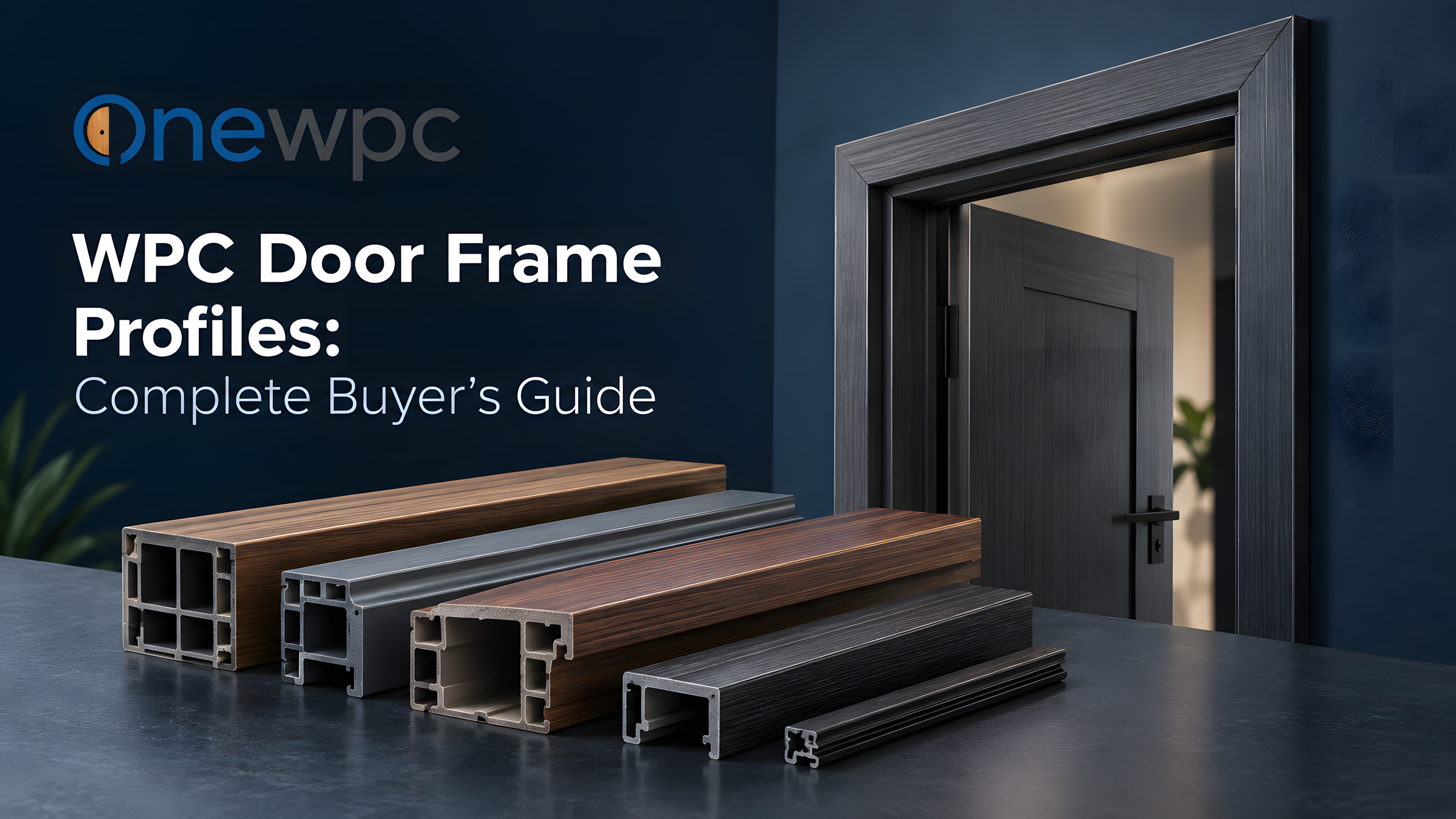
WPC (wood-plastic composite) is made by blending wood fiber or wood flour with a thermoplastic, plus additives for stability, color and processing. The mixture is extruded through a steel die, which shapes it into a continuous profile that is cooled, cut to length and finished.
Because the shape comes from the die, one extrusion line can produce the same section thousands of times with consistent dimensions. That repeatability is one of the main reasons door factories choose WPC over site-cut timber.
Main Types of WPC Door Frame Profiles
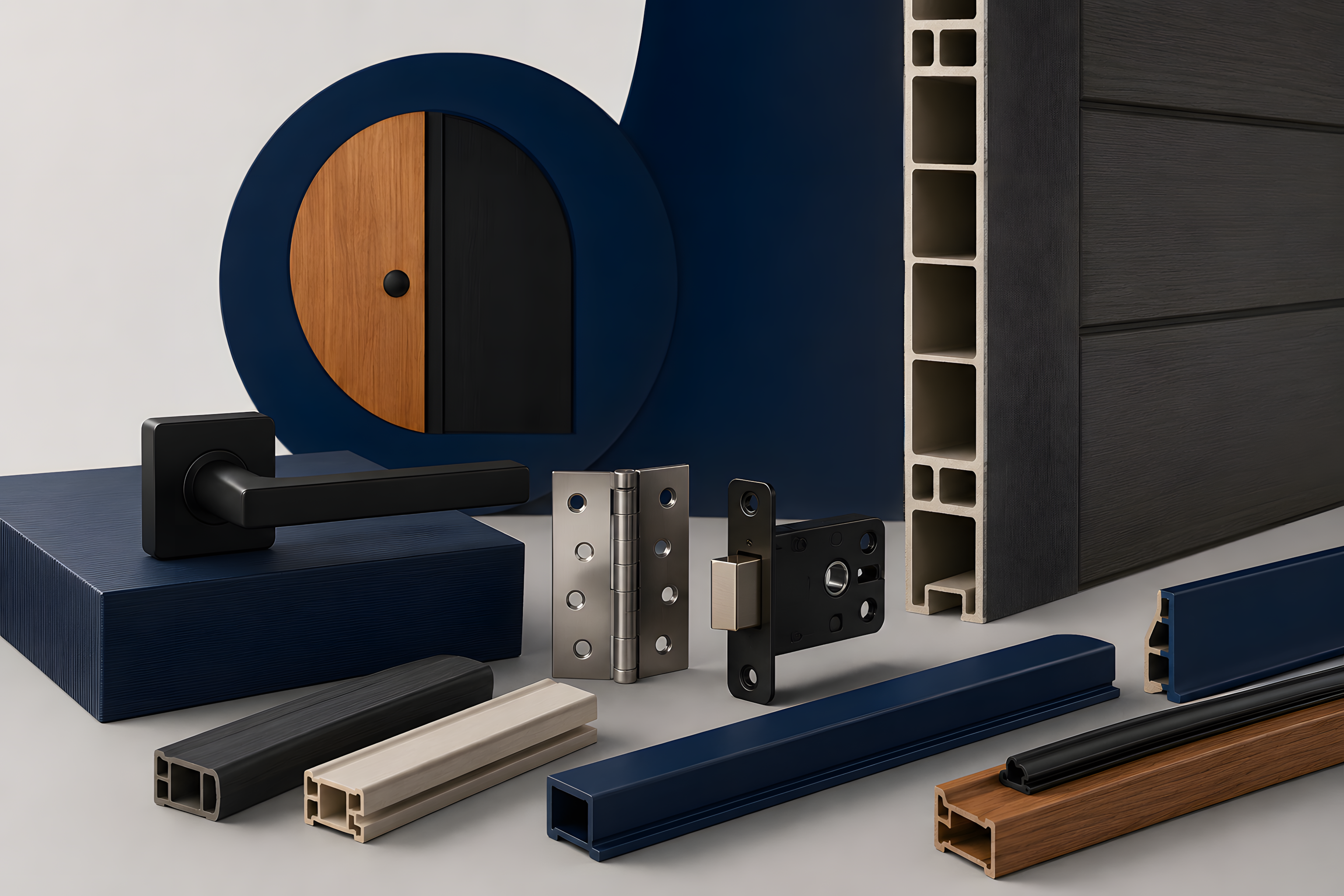
Most door projects need a small set of profile types that work together as a system:
| Profile type | Role in the door set | What to check |
|---|---|---|
| Frame / jamb | Main structural part that holds hinges and the lock strike | Wall thickness, screw holding, rebate size |
| Architrave / casing | Decorative trim covering the gap between frame and wall | Surface finish, corner joint quality |
| Door stop | Rebate where the door leaf closes | Fit with the leaf thickness |
| Threshold / sill | Bottom section for some designs | Moisture performance, wear resistance |
| Adjustable (telescopic) frame | Fits different wall thicknesses | Locking mechanism, tolerance between parts |
Hollow vs. Solid WPC Profiles
This is the first decision most buyers face.
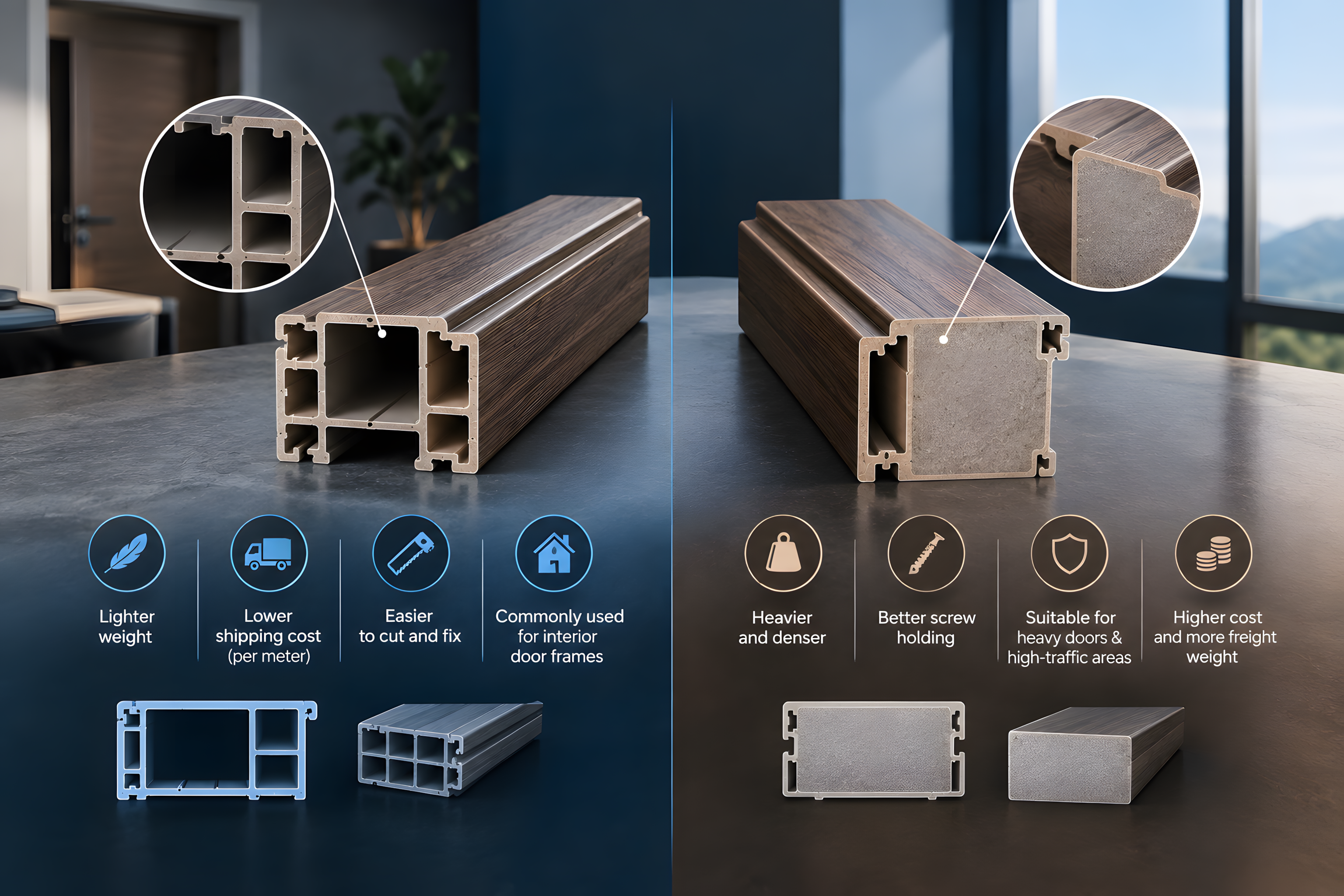
Hollow profiles have internal chambers. They are lighter, cheaper to ship per meter, and easier to cut and fix. Most interior door frames use them. Performance depends heavily on wall thickness and the rib design inside the chambers.
Solid profiles are heavier and denser, with better screw holding for hardware. They suit heavy doors, high-traffic areas or places where hinges carry more load, but cost more per meter and add freight weight.
A practical rule: use hollow multi-chamber profiles for standard interior doors, and consider solid or reinforced profiles for heavy leaves, fire-rated or commercial applications, subject to local codes.
7 Specifications to Compare Before You Order
1- Profile Dimensions and Rebate
Confirm the frame width, depth, rebate and the wall thickness it is designed for. Ask for a technical drawing, not only a photo. The rebate must match your door leaf thickness with the clearance your hinges and seals need.
2- Wall Thickness and Internal Structure
Thin walls save material but flex under hinge load. Ask for the wall thickness of the outer skin and the internal ribs, and ask to cut a sample cross-section so you can see it for yourself.
3- Material Formulation and Density
Wood content, polymer type and additives change how a profile behaves. A higher wood fiber ratio can feel more like timber but needs good formulation to resist water. Ask the supplier for density and water absorption figures from their own test reports, and treat missing data as a warning sign.
4- Surface Finish
Common finishes include: • PVC film lamination: a wide choice of wood grains and solid colors, and the most common finish for door sets. • Co-extruded skin: a protective layer extruded with the profile, good for outdoor-facing or humid use. • Painted or primed surfaces: flexible for color matching, but check adhesion.
For laminated profiles, the adhesive matters as much as the film. A properly applied PUR adhesive gives strong, moisture-resistant bonding, and poor lamination is a leading cause of peeling. If you laminate in-house, read our upcoming guide on PUR adhesive for lamination.
5- Dimensional Tolerance and Straightness
Hinge alignment and corner joints depend on tight tolerance. Check a few lengths against a flat surface for bow and twist, and measure the same section in different batches to confirm consistency.
6- Screw Holding and Hardware Fixing
Hinges and strike plates are where frames fail. Ask whether the profile has reinforced zones for hardware, and test by driving standard screws into a sample.
7- Color Consistency Between Batches
If you order in several shipments, color and grain must match from batch to batch. Ask how the supplier controls color, and whether they keep reference samples.
Standard Profiles or Custom Profiles?
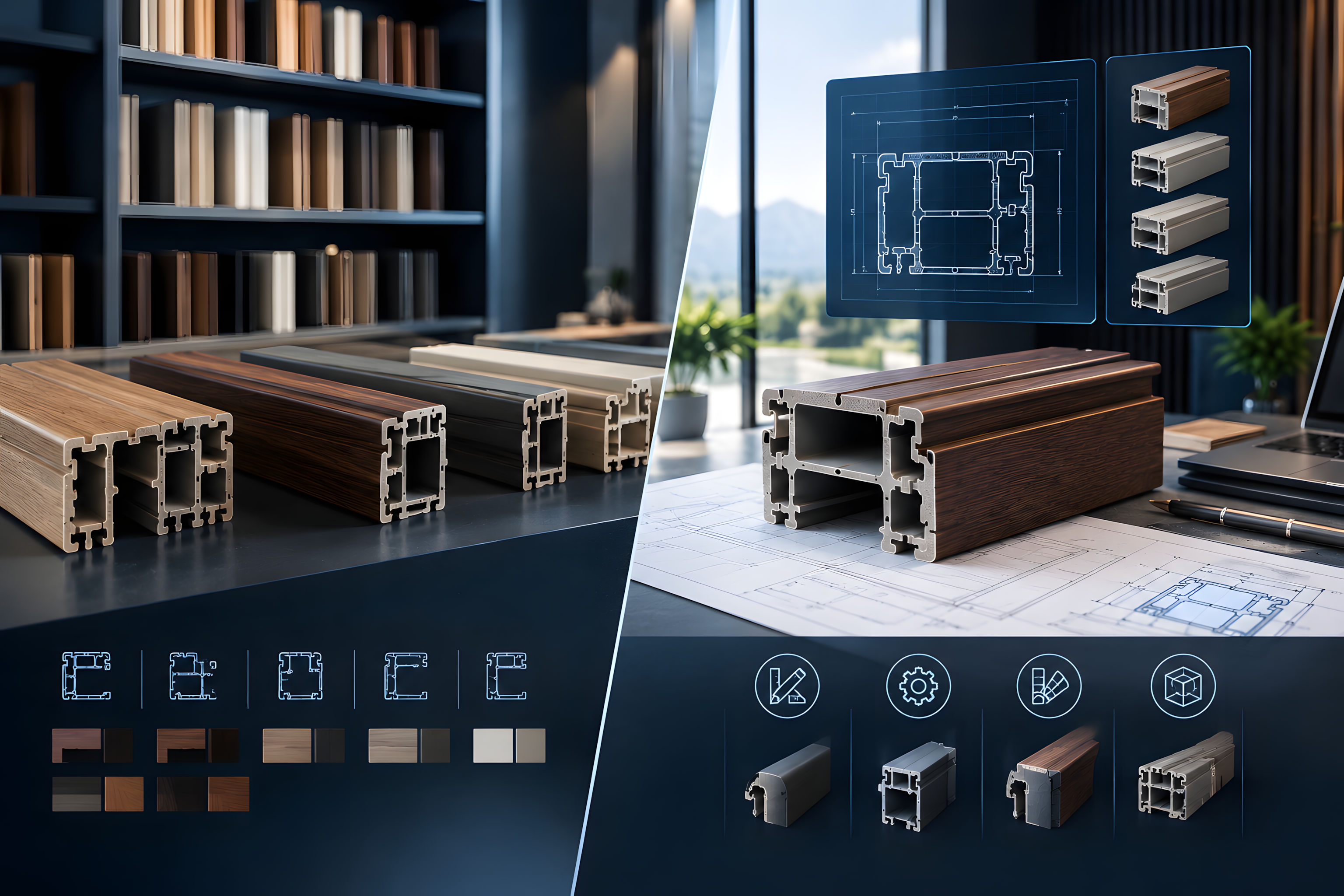
A catalog profile is the fastest route: no tooling cost, shorter lead time, and proven performance. You can browse available sections in the OneWPC catalog.
A custom profile makes sense when:
• you want a unique frame design that sets your doors apart, • your door leaf thickness or wall conditions differ from the standard, • you need a matched system that fits your own hardware or sealing strips.
Custom profiles require a new extrusion die (mould). The cost is a one-time investment, and it pays back when you order recurring volumes of an exclusive design. To see what's possible, see our WPC mould profiles page.
Quality Checks to Request From Your Supplier
Before placing a bulk order, ask for:
- Pre-production sample of the exact profile and finish.
- Technical drawing with dimensions and tolerances.
- Test data on density, water absorption and, where relevant, bending or screw holding.
- Photos or video of cut cross-sections and finishing quality.
- A pre-shipment inspection option, including a check of quantity, packing and random profile measurements.
Suppliers confident in their product will share these without hesitation.
MOQ, Lead Time and Export Packing
Three commercial points often decide the deal:
• MOQ: minimum order quantity usually differs for standard and custom profiles. Ask for both, and whether colors or finishes change the minimum. • Lead time: confirm separate times for samples, tooling (for custom profiles) and mass production. • Packing: profiles should be protected against scratches and moisture, bundled and labeled by item and length. Ask how the cargo is loaded to maximize container space without damaging finished surfaces.

Common Buying Mistakes to Avoid
• Choosing on price per meter alone. A thinner wall or lower-grade formulation saves money up front and costs more in claims. • Skipping the sample stage. Photos hide wall thickness, finish adhesion and straightness. • Ignoring the whole door set. Frame, stop and architrave should be designed to fit together. • Not matching profile to climate. Humid, hot or coastal markets need stronger moisture performance. • Forgetting hardware. Confirm hinge and lock compatibility early.
How to Choose a Supplier: A Quick Checklist
• Offers both standard and custom profile options • Provides technical drawings and test data • Can supply matching components (frames, architraves, stops) • Offers consistent finishing and color control • Supports samples and pre-shipment inspection • Has export experience with documentation and packing
For a deeper look at supplier selection, see our guide on how to choose a reliable WPC door components supplier for bulk orders.
Frequently Asked Questions
What is a WPC door frame made of?
A WPC door frame is made of wood fiber combined with a polymer (commonly PVC) and additives, extruded into a shaped profile.
Are WPC door frames waterproof?
WPC frames are highly resistant to moisture and do not rot or swell like solid wood. Actual performance depends on formulation and finish, so ask for water absorption data.
Are WPC door frames better than wooden frames?
For humid environments and projects that need consistency, WPC is often the better choice, since it resists moisture, termites and warping. Solid wood still suits buyers who want a natural timber appearance.
Can WPC door frames be made in custom shapes?
Yes. Custom shapes need a dedicated extrusion die. Once the mould is made, the same profile can be produced repeatedly with consistent dimensions.
Hollow or solid: which should I choose?
Hollow profiles suit most interior doors and keep weight and freight cost down. Choose solid or reinforced profiles for heavy leaves or demanding commercial use.
How do I check the quality of a WPC profile before ordering?
Request a physical sample, inspect the cross-section, test screw holding, check straightness and ask for the supplier's test data.

Get the Right Profiles for Your Doors
Whether you need standard sections for a fast launch or an exclusive profile for your own door range, the right WPC door frame profile balances design, strength, finish and price. Browse the full OneWPC catalog, or explore custom WPC mould profiles and send us your drawings and target market for a quotation.