Sourcing WPC door components in bulk is different from buying a few sample units. At scale, a single bad batch, a missed certification, or an unreliable lead time can disrupt your entire production line — or worse, your reputation with your own customers.
Whether you're a distributor stocking inventory or a manufacturer integrating WPC components into your own product line, the supplier you choose matters more than the price quote on day one. This guide walks through five practical factors to evaluate before signing a bulk order — plus the red flags that tell you to walk away.
1. Confirm Material Quality and Composition
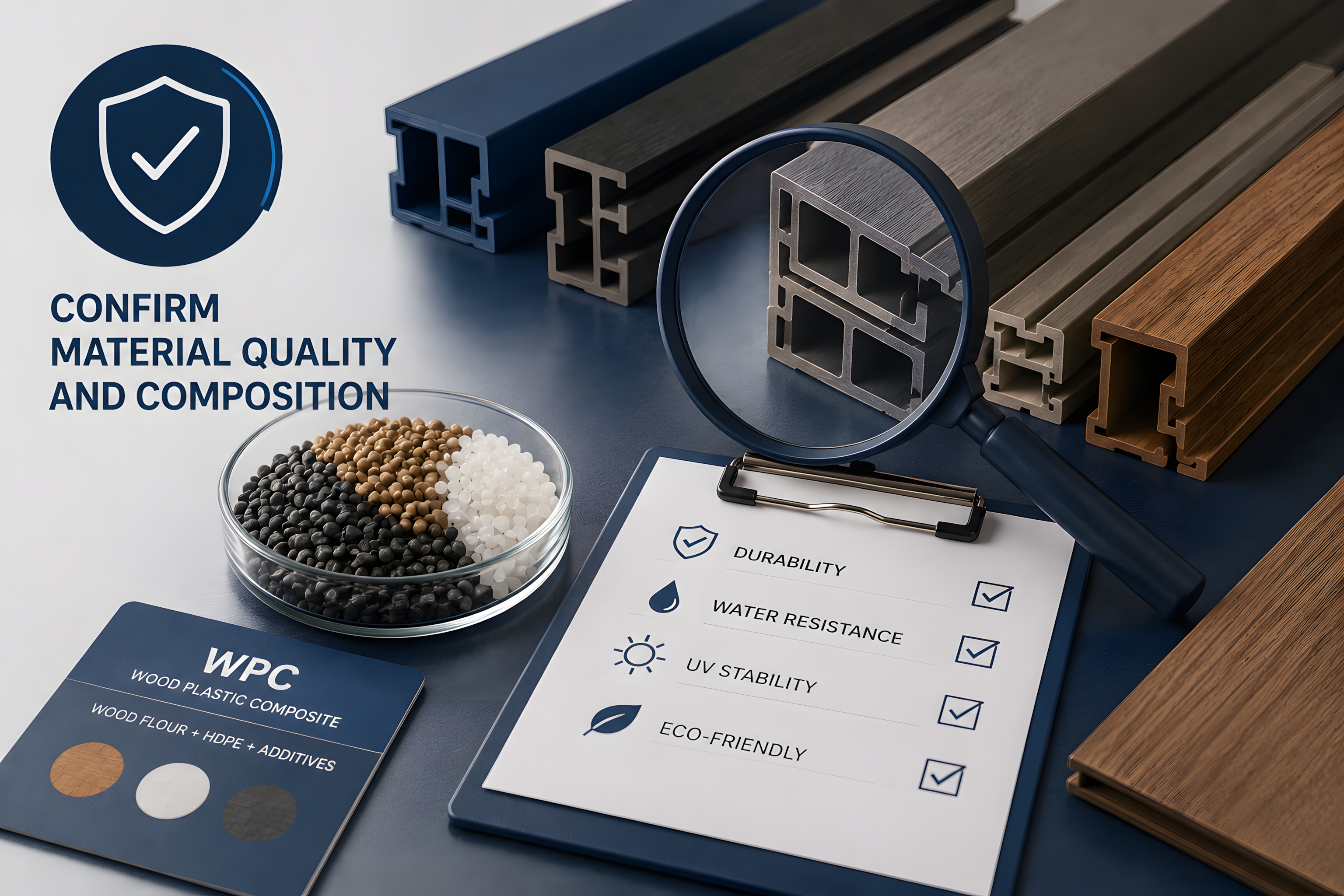
WPC (Wood Plastic Composite) door components vary significantly in quality depending on the ratio of PVC, wood or calcium powder filler, and foaming agents used in production. A lower-cost supplier may be cutting corners on this ratio, which directly affects durability, weight, and moisture resistance.
Before committing to a bulk order, ask your supplier for:
- A detailed material composition spec sheet
- Physical samples for independent testing
- Consistency data across multiple production batches
Reliable suppliers won't hesitate to share this information. Reluctance here is often the first sign of a quality issue further down the line.
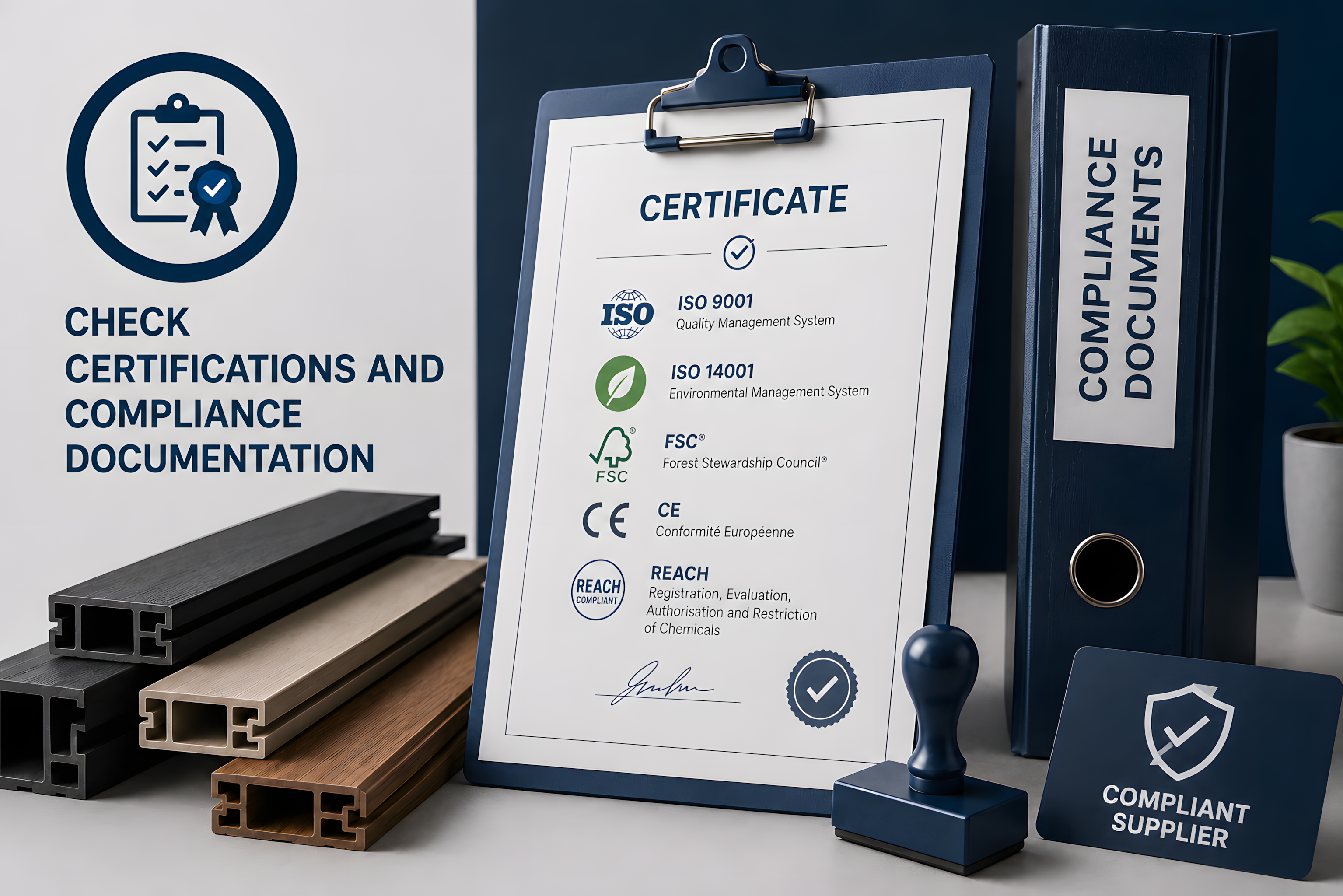
2. Check Certifications and Compliance Documentation
Certifications protect you on two fronts: they verify product quality, and they ensure your shipment clears customs without delays in your target market.
Depending on where you're importing to, look for:
- ISO 9001 (quality management systems)
- Third-party test reports from inspection bodies such as SGS or Bureau Veritas
- Fire rating and moisture/water absorption test results
- Compliance marks relevant to your market (e.g., CE for the EU, ASTM standards for the US)
Ask for original or verifiable digital copies — not just a logo on a product brochure.
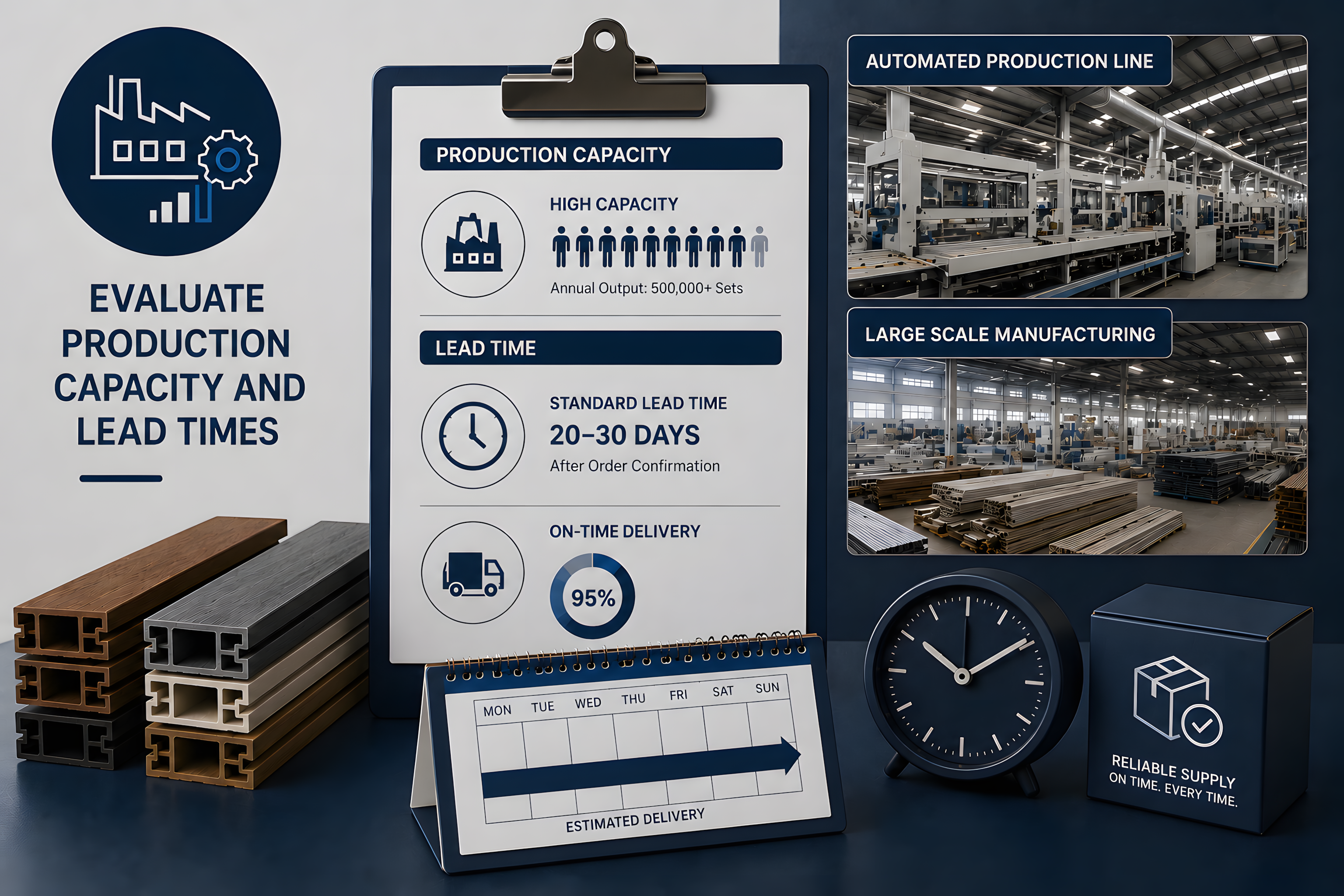
3. Evaluate Production Capacity and Lead Times
A supplier who looks great on a sample order can still struggle when you scale to container-level volume. Before placing a bulk order, get clarity on:
- Monthly production capacity and current order backlog
- Machinery and extrusion line capabilities
- Lead time for samples versus lead time for full bulk orders
- How they handle delays or raw material shortages
If possible, request a factory audit — either in person or via a live video walkthrough. This single step eliminates a large share of supplier risk before money changes hands.
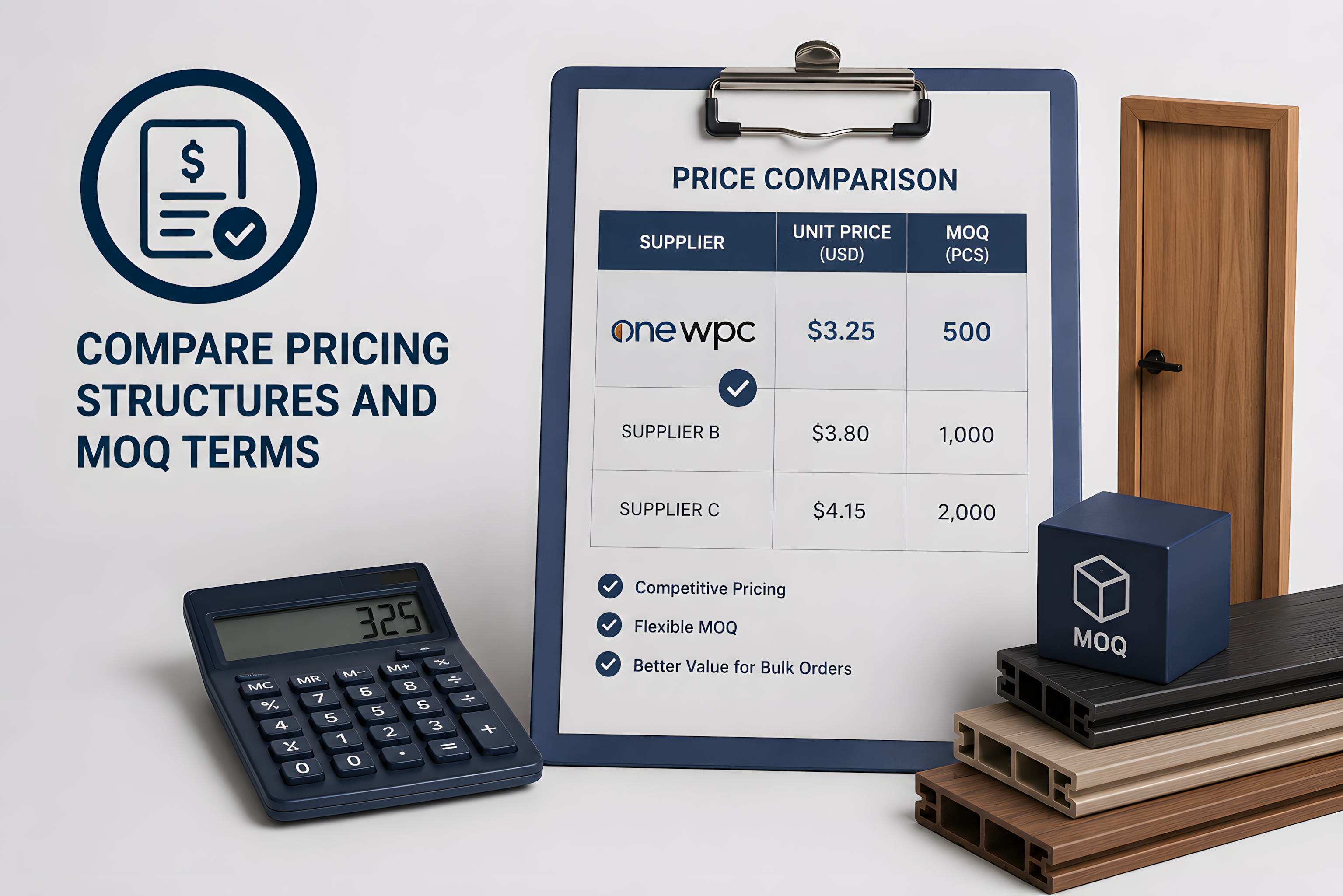
4. Compare Pricing Structures and MOQ Terms
Price matters, but the lowest quote is not always the safest choice. Suspiciously low pricing is sometimes a sign of diluted material ratios or inconsistent quality control.
When comparing suppliers, look at:
- Tiered pricing based on order volume
- Minimum order quantity (MOQ) flexibility
- Payment terms (T/T, LC, deposit structure)
- Price stability — will the quote hold if you reorder in three months?
A transparent supplier will break down pricing clearly rather than offering a single bundled number with no explanation.
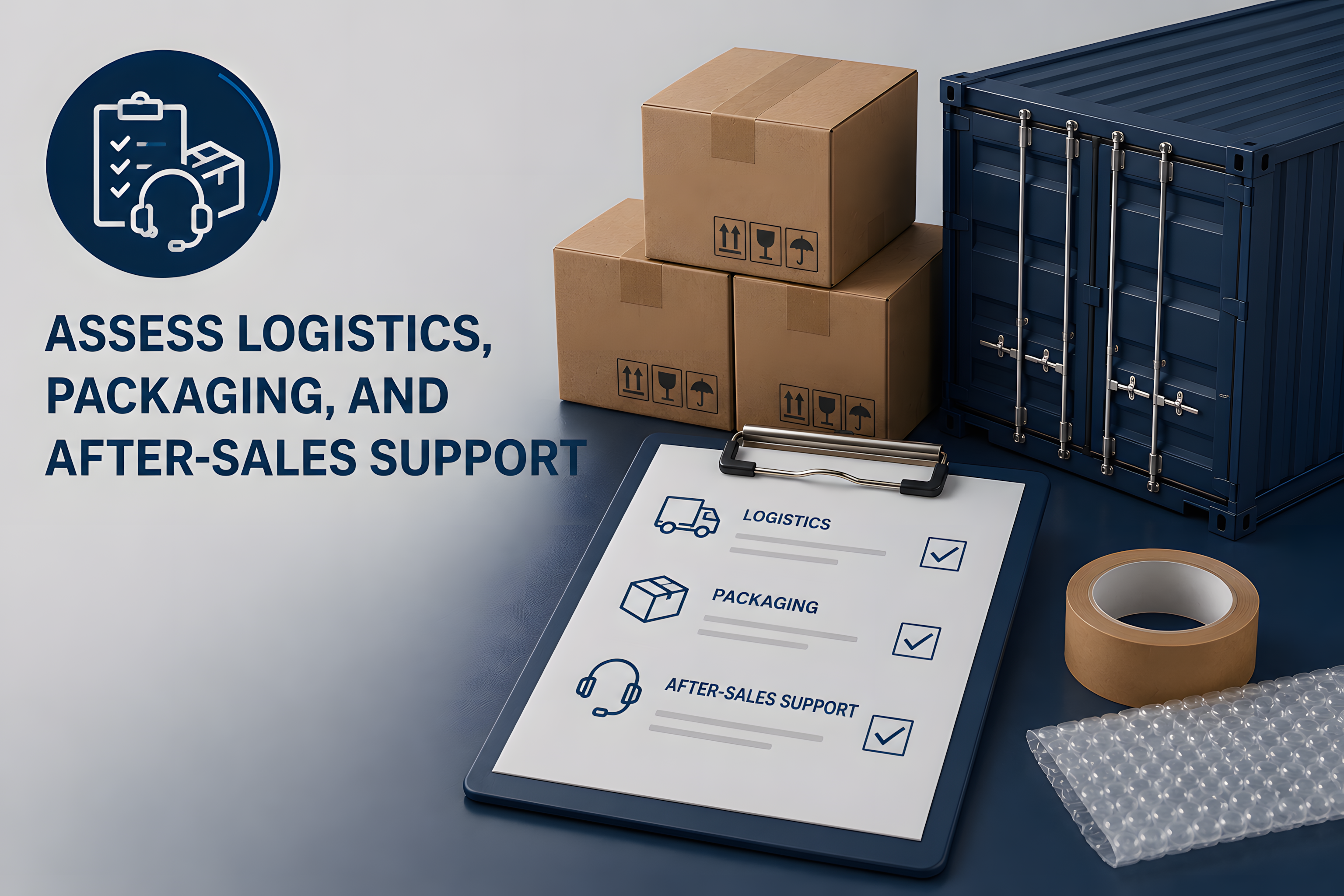
5. Assess Logistics, Packaging, and After-Sales Support
Bulk orders introduce logistics challenges that smaller orders don't — container loading efficiency, transit damage risk, and customs documentation all become critical.
Before finalizing a supplier, confirm:
- Export-grade packaging standards to prevent transit damage
- Container loading optimization (to reduce shipping cost per unit)
- Complete documentation for customs clearance
- Warranty terms and the process for replacing defective units
A supplier's responsiveness during this stage is often a preview of how they'll handle issues after the order ships.
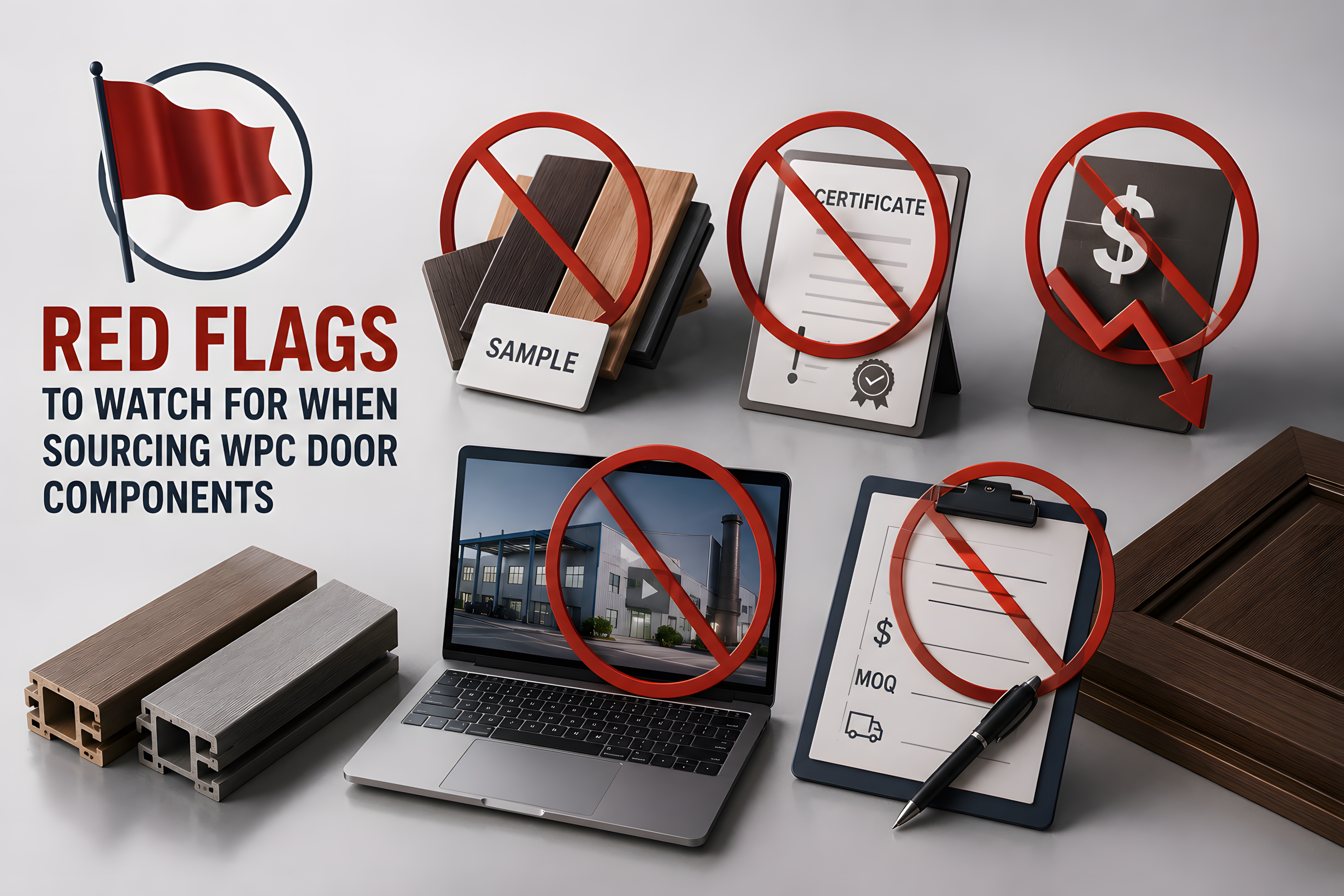
Red Flags to Watch for When Sourcing WPC Door Components
Even experienced buyers can be caught off guard. Be cautious if a supplier:
- Refuses to provide samples or material spec sheets
- Cannot produce valid, verifiable certifications
- Quotes prices significantly below the market average with no clear explanation
- Avoids factory audits or video walkthroughs
- Won't put pricing, MOQ, or delivery terms in writing
Any one of these alone isn't necessarily disqualifying — but two or more together is a strong signal to look elsewhere.

Frequently Asked Questions
### What is a typical MOQ for WPC door components? MOQs vary by supplier and product type, but most bulk WPC door component orders start at container-load quantities. Some suppliers offer lower MOQs for new buyers willing to pay a slightly higher per-unit price.
### How long does sampling usually take before a bulk order? Sample production and shipping typically takes a few weeks, depending on customization requirements and the supplier's current production schedule. Always test samples before committing to a full bulk order.
### What certifications should I always ask for? At minimum, request ISO 9001 certification and third-party test reports (such as SGS or Bureau Veritas) covering material composition, fire rating, and moisture resistance.
### Can WPC door components be customized for different climates or markets? Yes. Reputable manufacturers can adjust formulations for high-humidity environments, specific fire-rating requirements, or regional design preferences. Discuss your target market's conditions during the sampling phase.

Choosing a Supplier You Can Scale With
Selecting a WPC door components supplier isn't a one-time decision — it's the foundation of a relationship you'll likely depend on for years of reordering. The suppliers worth working with are transparent about material composition, documentation, pricing, and logistics from the very first conversation.
If you're evaluating suppliers for an upcoming bulk order, start by requesting samples and certification documents side by side — it's the fastest way to separate serious manufacturers from the rest.